Village Green Screen
An exhibition that asked, and didn't answer
- Role
- Managing Installation
- Location
- Hereford Museum
- With
- Meadow Arts / Hereford Museum
- Date
- February 2018

We managed the installation of Faye Claridge's #VillageGreenScreen for Meadow Arts
Dark Olive worked with Meadow Arts, artist Faye Claridge and Hereford Museum to manage the installation of #VillageGreenScreen.
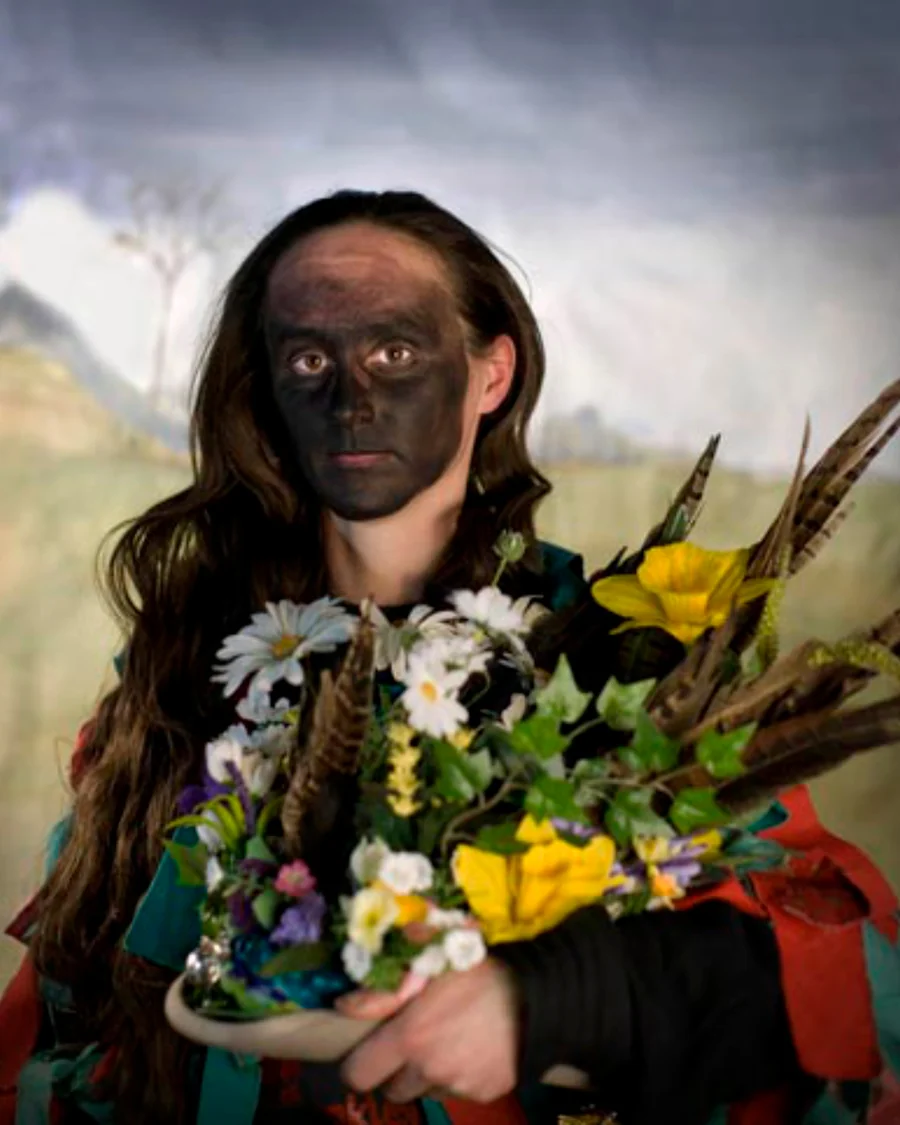
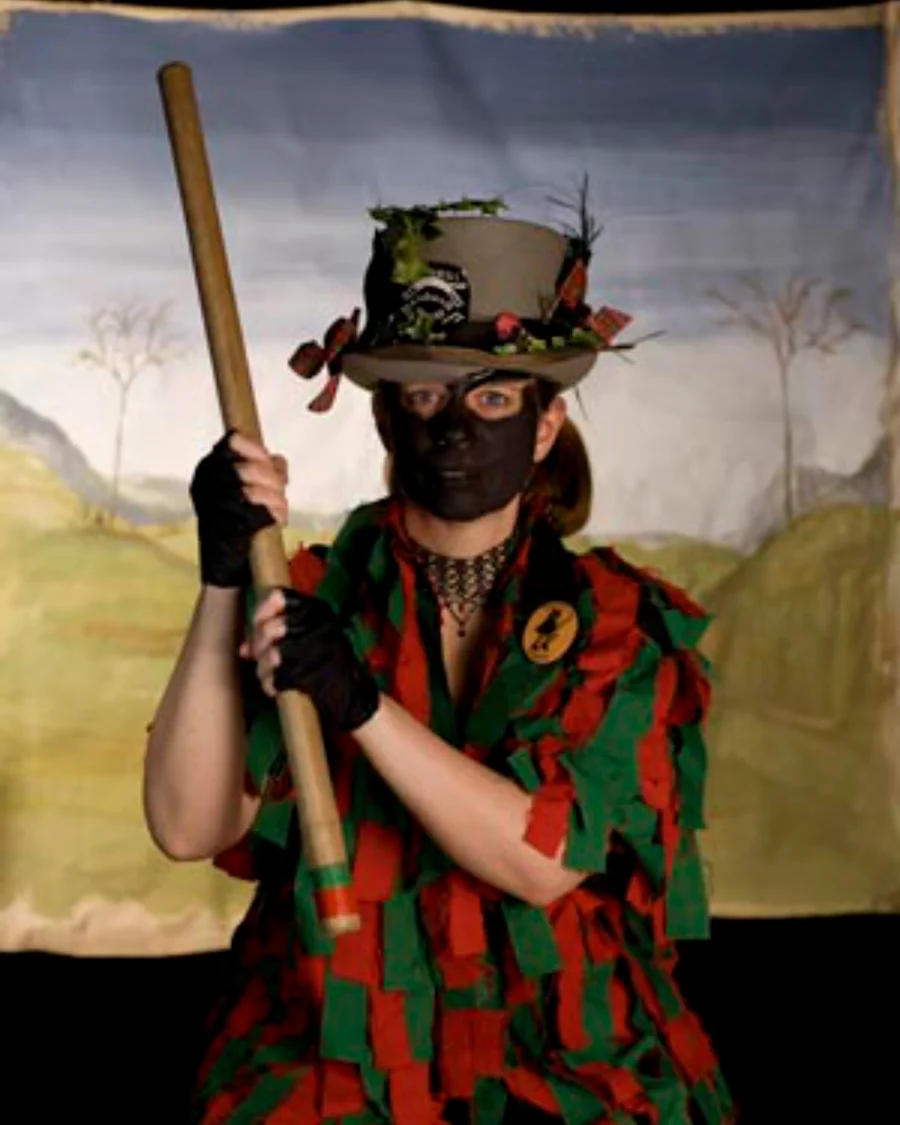
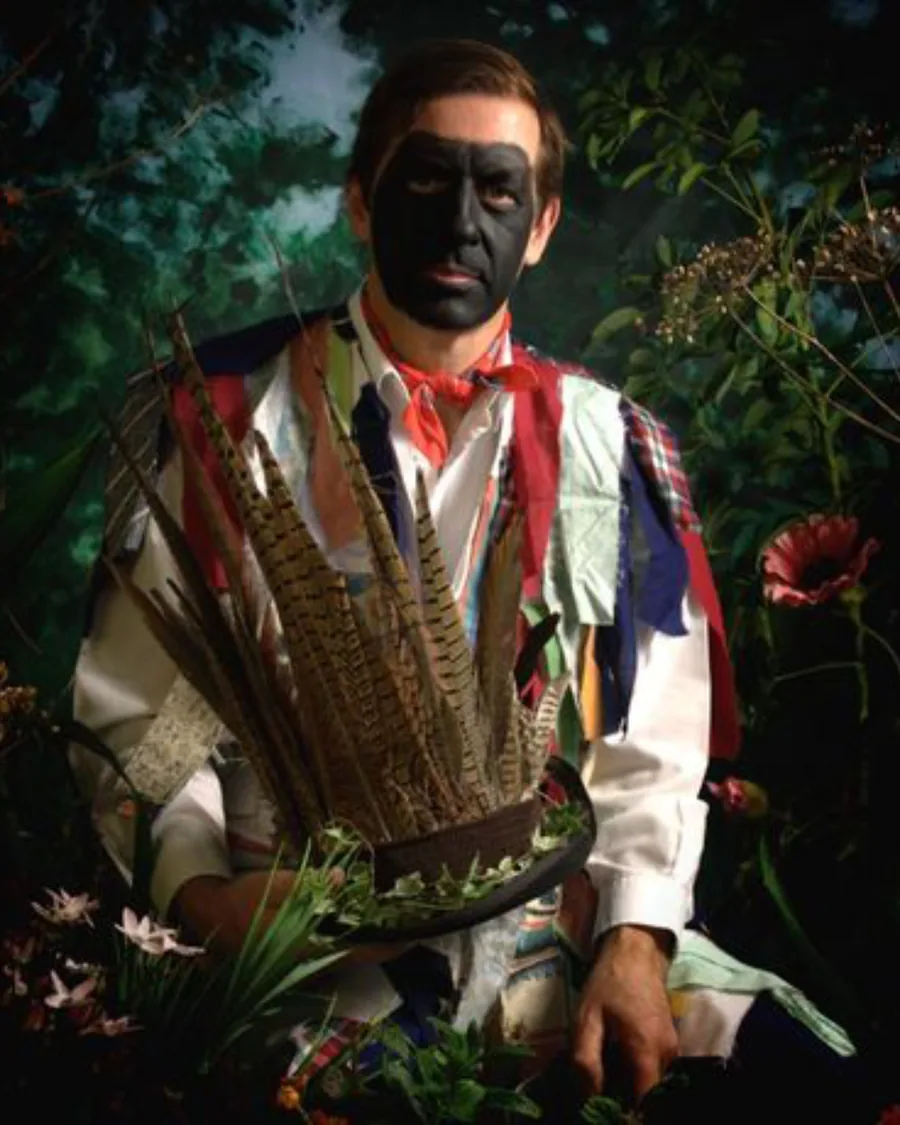
Claridge had been photographing Morris dancers for years before this. In 2009 two exhibitions of the work — Descendants of the Unfamiliar at Danielle Arnaud and Only A Stranger Can Bring Good Luck, Only A Known Man Can Hang at Three White Walls in Birmingham — showed dancers in painted, theatrical settings, portraits that "both reveal and obscure, document and create". Her gallery described her as working deliberately "on the margins of society, with groups who are ridiculed or feared for the image they portray", in work that "forces us to confront the ethics of identity and representation". #VillageGreenScreen came back to the same dancers nearly a decade later, by which time the question had become a great deal harder to ask.
#VillageGreenScreen in Hereford
Exhibition Dates: 6 - 17 February 2018 Venue: Hereford Museum & Art Gallery
#VillageGreenScreen is a pop-up photography studio and conversation space created to explore blackface issues, responding to the importance many contributors put on context when considering where or when appearance can cause offence. Under a simple shelter, an uncanny village green is created, with a bench on vivid fake grass that rises to create a backdrop 'green screen' for photographs.
Surrounded by bunting that combines African grass skirt with Morris rags and English rose prints, the green screen setting also has a village noticeboard containing an oversize picture of an obscured Prince Harry in St Kitts "dancing with traditionally dressed locals" in costumes strikingly similar to Border Morris dancers. Behind this is an intimate area for conversation and to one side is a postbox inviting anonymous views to be collected.
Here the artist photographs the Morris dancers at the centre of this issue, showing how they're adapting their full blackface under scrutiny or defending their original look. The disguise element of the Morris costume is locally distinctive, identified specifically with the Welsh border areas of Herefordshire, Worcestershire and Shropshire. Morris styles originating from other regions usually do not cover the face at all so its defense in Hereford is palpably emotive. Border Morris is also associated with winter and specifically with wassailing customs, which continue in Herefordshire, the leading county for cider apple orchards in the UK.
What the work does not do is answer the question. The dancers are photographed both adapting their blackface under scrutiny and defending it. The bunting sets African grass skirt against Morris rags and English rose prints. The noticeboard puts a royal photograph beside a Border Morris costume and leaves the resemblance sitting there. Then the piece offers a bench, a green screen, somewhere quiet to talk, and a postbox for whatever a visitor would rather say anonymously. It gathers the argument rather than settling it, and hands it back to the people standing in it.
For the exhibition, in addition to #VillageGreenScreen being in active use and gathering views from visitors, portraits and audio recordings made in Shrewsbury will be unveiled.
Of Their Own Volition - Background
"In August 2017, Morris dancers using blackface were banned from a UK festival for the first time and I created #VillageGreenScreen to explore the social, personal and political background for, and implications of, that decision.
My roots in this go back a long way, being from a Morris dancing family and camping at my first festival at one-day-old, so I grew up with the dominant narrative that black face paint in Morris dancing is purely for disguise, potentially with links to mining, with no connection to racial representation. When one of my Morris portraits was used for a Tate Modern conference, I was challenged in this and decided to seek out definitive evidence. My research has taken me to Morocco (home of 'Moorish' dancing) and New York (birthplace of black and white minstrelsy) in addition to seeking input from the Stuart Hall Library, living artists, The National Caribbean Heritage Centre, the Museum of British Folklore and the main Morris dance societies."
Faye Claridge, 2017
All photographs © Faye Claridge.